Headless CMS development is revolutionizing the way we think about content management and delivery. By separating the back-end from the front-end, this modern approach enables developers to create more dynamic and responsive web experiences.
This shift not only enhances flexibility but also allows for the utilization of various technologies and frameworks, making it an appealing choice for businesses looking to streamline their web presence.
Headless CMS Development Overview
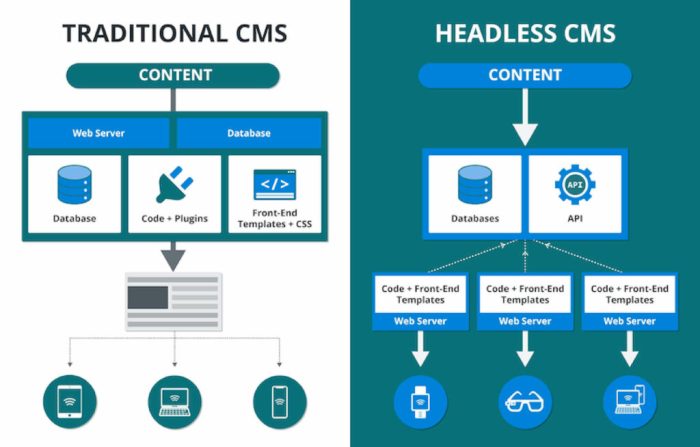
Headless Content Management Systems (CMS) have gained popularity in the web development landscape due to their flexibility and adaptability. Unlike traditional CMS platforms that couple content management with front-end presentation, headless CMS solutions decouple these two components, allowing developers to deliver content seamlessly across various platforms and devices. The architecture of a headless CMS consists of a backend that manages and stores content, and an API that serves this content to any front-end technology, whether it be websites, mobile applications, or even IoT devices.
This separation enables developers to utilize modern frameworks, tools, and technologies while maintaining a consistent content strategy.
Advantages of Utilizing a Headless CMS
The benefits of adopting a headless CMS approach in web development are significant and varied. These key advantages contribute to a more efficient content delivery and user experience:
- Flexibility: Developers can choose their preferred front-end technologies without being restricted by the CMS platform.
- Omnichannel Delivery: Content can be delivered to multiple channels, including web, mobile, and smart devices, from a single source.
- Improved Performance: Headless CMSs often provide faster loading times as they enable the use of lightweight frameworks that enhance user experience.
- Scalability: As businesses grow, a headless CMS can easily adapt to changing demands without significant overhauls of the system.
- Better User Experience: Developers can create highly interactive and personalized experiences that are not limited by the constraints of traditional CMS templates.
Differences Between Traditional CMS and Headless CMS Approaches
Understanding the fundamental differences between traditional and headless CMS solutions is crucial for making informed decisions in web development. Traditional CMS platforms combine front-end and back-end functionality into a single system, which can often lead to limitations in flexibility and adaptability. Developers are typically restricted to the themes and templates provided by the CMS, leading to potential bottlenecks in creative content presentation.
On the other hand, headless CMS platforms separate the content management from the presentation layer, empowering developers to use any technology they prefer for the front end. This approach allows for a more tailored and unique user experience.
“The decoupled architecture of headless CMS allows for faster innovation and better alignment with modern technology trends.”
The implications of these differences extend beyond technicalities; they influence how businesses interact with users and how they can scale their digital strategies effectively. By embracing a headless CMS, organizations position themselves to respond rapidly to market changes and user demands, fostering sustained growth and engagement.
Key Technologies in Headless CMS Development
In the rapidly evolving digital landscape, headless Content Management Systems (CMS) are becoming a vital part of web development. They enable developers to decouple the front-end and back-end processes, which allows for greater flexibility and a more tailored user experience. This section will delve into the key technologies that drive headless CMS development, encompassing programming languages, frameworks, and compatible front-end technologies.
Popular Programming Languages
Various programming languages play a crucial role in the development of headless CMS platforms. Each language brings its unique strengths to the table, catering to different aspects of CMS functionalities. Understanding these languages can help developers choose the right tools for their projects.
- JavaScript: A cornerstone of modern web development, JavaScript is essential for creating interactive user interfaces and is extensively used in headless CMS solutions. Frameworks such as Node.js allow developers to build scalable back-end APIs.
- PHP: Known for its flexibility and ease of use, PHP is a popular choice for building robust CMS back-ends. Many well-established CMS platforms, like WordPress, are based on PHP.
- Python: Python’s simplicity and readability make it a favorite among developers. Its frameworks, like Django and Flask, facilitate rapid development of scalable applications.
- Ruby: Ruby, particularly with the Ruby on Rails framework, allows for quick development and prototyping, making it a desirable option for headless CMS functionality.
- Go: Known for its efficiency and performance, Go is increasingly being adopted for building high-performance APIs in headless CMS systems.
Frameworks and Tools for Headless CMS Solutions
The landscape of headless CMS development is enriched by numerous frameworks and tools that streamline the creation and management of content. These resources help developers build effective and lightweight solutions.
- Contentful: A popular headless CMS that provides a powerful API, allowing developers to create, manage, and deliver content across multiple platforms seamlessly.
- Strapi: An open-source headless CMS framework that offers flexibility and customization, enabling users to create tailored content structures with ease.
- Sanity: Known for its real-time collaboration features, Sanity provides a highly customizable content studio and a powerful API for developers.
- Prismic: A headless CMS that focuses on the collaboration between developers and marketers, Prismic allows users to create a variety of content types and easily integrate them into their projects.
- Ghost: Originally designed as a blogging platform, Ghost has evolved into a versatile headless CMS that offers powerful features for content creation and distribution.
Comparison of Front-End Technologies Compatible with Headless CMS
Headless CMS allows developers to use various front-end technologies to create engaging user interfaces. The flexibility to choose the front-end framework enables a more tailored approach to application development.
| Front-End Technology | Key Features | Integration Capabilities |
|---|---|---|
| React | Component-based architecture, Virtual DOM for performance | Seamless integration with RESTful and GraphQL APIs |
| Vue.js | Progressive framework, reactive data binding | Easily integrates with existing projects, supports API consumption |
| Angular | Robust framework, two-way data binding | Strong support for REST APIs, well-suited for enterprise applications |
| Svelte | Builds reactive user interfaces at compile time | Integrates effortlessly with headless CMS APIs, focusing on speed |
| Next.js | Server-side rendering, automatic code splitting | Optimizes performance for dynamic content delivery through headless CMS |
Integrating Headless CMS with Other Technologies
Integrating a headless CMS with other technologies is essential for creating a comprehensive digital ecosystem. This integration allows for seamless data flow, enhances user experiences, and maximizes operational efficiencies. In this section, we will explore how to connect a headless CMS with web hosting and domain services, integrate it with e-commerce platforms, and utilize APIs to amplify its functionalities.
Integration with Web Hosting and Domain Name Services
Connecting a headless CMS with web hosting and domain services is crucial for ensuring that content is delivered effectively to users. The integration streamlines content management, providing a stable and responsive environment. For successful integration, consider the following methods:
- Choosing Compatible Hosting: Select a hosting provider that supports the programming languages and frameworks used by your headless CMS. This ensures optimal performance and compatibility.
- Setting Up Domain Redirection: Configure domain name system (DNS) settings to point to your headless CMS’s API endpoints. This allows for easier content access using a user-friendly URL.
- Utilizing CDN Services: Implement a Content Delivery Network (CDN) to cache static assets and improve load times. This is especially important for global reach, as it minimizes latency for users across different regions.
Integration with E-Commerce Platforms
Linking a headless CMS with e-commerce platforms unlocks the potential for a richer shopping experience. This integration allows for dynamic content management and personalized user interactions. Important considerations for this integration include:
- Product Information Management: Use the headless CMS to manage product details, descriptions, and media. This centralization allows e-commerce platforms to dynamically pull updated content as needed.
- Seamless Checkout Processes: Integrate payment gateways directly within the headless CMS to streamline the checkout experience, minimizing redirects and improving conversion rates.
- Personalized User Experiences: Leverage user data and behavior analytics to serve tailored content and product recommendations via the headless CMS, enhancing customer engagement and satisfaction.
Role of APIs in Enhancing Functionalities
APIs (Application Programming Interfaces) are central to the functionality of a headless CMS, enabling integration with various services and applications. The power of APIs lies in their ability to facilitate communication between different systems. Key aspects include:
- Data Fetching: APIs allow for real-time data fetching, ensuring that users receive the most current content without needing to refresh or reload pages.
- Third-Party Integrations: Incorporating third-party services like analytics, marketing tools, or social media platforms becomes straightforward with APIs, enabling a cohesive tech stack.
- Custom Functionality: APIs enable developers to create custom features, allowing businesses to evolve their technology stack based on changing needs without needing a complete overhaul.
APIs serve as the backbone of headless CMS integrations, enhancing flexibility and extending the capabilities of digital platforms.
Last Point
In summary, headless CMS development offers a fresh perspective on content management, delivering unparalleled flexibility and integration capabilities. As businesses continue to adapt to the rapidly changing digital landscape, embracing this innovative approach can provide a significant advantage in staying ahead of the competition.
User Queries
What is a headless CMS?
A headless CMS is a content management system that separates the content creation and storage from the presentation layer, allowing developers more control over how content is delivered to different platforms.
What are the benefits of using a headless CMS?
Some benefits include increased flexibility, scalability, and the ability to use various front-end technologies without being tied to a specific framework.
How does a headless CMS work with e-commerce platforms?
A headless CMS can easily integrate with e-commerce platforms through APIs, enabling seamless content delivery and management across different shopping interfaces.
Is a headless CMS more expensive than traditional CMS?
While initial costs may be higher due to the need for custom development, the long-term benefits and flexibility often outweigh these expenses.
Can I use a headless CMS for mobile applications?
Yes, a headless CMS is highly suitable for mobile applications, as it can deliver content to various devices and platforms efficiently through APIs.


