
Beginning with satellite data communication, the narrative unfolds in a compelling and distinctive manner, drawing readers into a story that promises to be both engaging and uniquely memorable.
This technology has become a cornerstone of modern communication, enabling data transfer across vast distances with minimal latency. With recent advancements, satellite data communication has evolved to provide faster, more reliable services that cater to various industries, bridging gaps in connectivity and ensuring that even the most remote locations can stay connected.
Satellite Data Communication Overview
Satellite data communication is a technology that facilitates the transfer of data through satellites orbiting the Earth. This method of communication has become increasingly vital due to its ability to provide connectivity in remote areas and its global coverage. By leveraging satellite technology, organizations can maintain communication links that are often not feasible with terrestrial systems, making it an essential component in various sectors, including telecommunications, broadcasting, and military operations.Satellite communication operates on the principles of radio frequency transmission, utilizing geostationary, medium, and low Earth orbit satellites to relay signals between ground stations and end-users.
This system allows for a range of applications, from internet services to television broadcasting, and offers distinct advantages over other forms of data communication.
Comparison with Other Forms of Data Communication
When comparing satellite data communication to terrestrial forms such as fiber optics and microwave transmission, several key differences emerge. Understanding these distinctions helps to recognize the unique advantages and limitations of satellite systems. The following points Artikel important aspects of this comparison:
- Coverage: Satellite systems can cover vast geographical areas, including remote regions where traditional infrastructure is lacking, unlike terrestrial systems that are often constrained by physical geography.
- Latency: Satellite communication typically experiences higher latency due to the distance signals must travel to and from space. This can impact real-time applications compared to fiber optic networks, which boast lower latency.
- Cost: The initial investment for satellite systems can be high, but operational costs may be lower than maintaining extensive ground networks in sparsely populated areas.
- Weather Dependency: Satellite signals can be affected by weather conditions such as rain or snow, while terrestrial systems may be more resilient to environmental factors.
Technological Advancements in Satellite Data Communication
Recent advancements in satellite technology have significantly enhanced the capabilities and efficiency of satellite data communication. Notable developments include:
High Throughput Satellites (HTS)
These satellites utilize frequency reuse and advanced modulation techniques to substantially increase bandwidth, allowing for greater data transmission rates.
Low Earth Orbit (LEO) Satellites
The emergence of LEO satellite constellations, such as those from SpaceX’s Starlink, has reduced latency and improved service quality by placing satellites closer to the Earth’s surface.
Software-Defined Radios (SDRs)
SDRs enable more flexible and efficient communication by allowing satellite operators to adjust frequencies and modulation schemes based on real-time conditions and requirements.
Optical Communication
Researchers are exploring the potential of optical communication technologies to transmit data via laser beams in space, promising higher data rates and improved security.The ongoing evolution of satellite data communication continues to reshape how we connect globally, offering faster, more reliable communication options that are essential in our increasingly digital world.
Applications of Satellite Data Communication
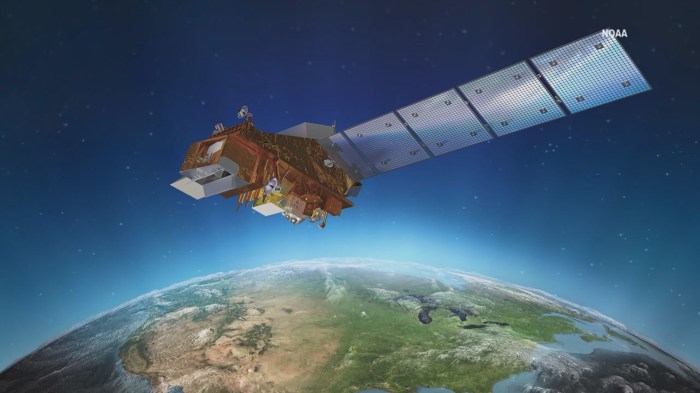
Satellite data communication plays a crucial role across various industries, enabling efficient and reliable connectivity for diverse applications. From ensuring global internet access to supporting emergency response efforts, the impact of satellite communications is far-reaching and increasingly essential in our interconnected world.Satellite communication is a powerful tool that supports numerous industries by providing reliable data transmission capabilities. Its applications are especially significant in sectors where traditional communication infrastructure is limited or non-existent.
The following industries heavily rely on satellite data communication:
Key Industries Utilizing Satellite Data Communication
Many industries benefit from satellite data communication, leveraging its strengths to enhance operations and reach remote areas. The industries include:
- Telecommunications: Satellite communication enables telecommunications companies to extend their services to remote locations where terrestrial networks are not feasible, ensuring connectivity for mobile phones and internet services.
- Aerospace and Aviation: Satellite systems are vital for navigation, weather forecasting, and in-flight communications, allowing pilots to access real-time data and improving flight safety.
- Maritime: Ships at sea depend on satellite communication for navigation, cargo tracking, and crew welfare, maintaining contact with operational centers on land.
- Oil and Gas: Remote drilling sites rely on satellite communication for data transmission, monitoring, and coordination, ensuring efficient operation in locations far from traditional networks.
- Media and Broadcasting: Satellite links are essential for live broadcasting, enabling media companies to transmit video and audio content globally, especially from hard-to-reach locations.
- Government and Defense: Governments use satellite communication for national security operations, disaster response, and remote surveillance, providing critical data in times of need.
- Healthcare: Telemedicine and remote health monitoring utilize satellite communication to connect patients in rural areas with healthcare providers, ensuring access to medical advice and services.
Global Internet Access in Remote Areas
One of the most significant contributions satellite data communication makes is in bridging the digital divide. By providing high-speed internet access to remote and underserved regions, satellite technology promotes connectivity and inclusivity. In areas where laying down fiber optic cables is impractical due to geographical challenges or cost, satellites offer an alternative solution. Companies like SpaceX with its Starlink initiative and OneWeb are deploying large constellations of small satellites to deliver internet access globally, transforming the way people communicate and interact online.
“Satellite internet can reach places where traditional broadband cannot, providing access to education, information, and services.”
These advancements are crucial for remote communities, allowing them to participate in the digital economy, access online education, and benefit from telehealth services.
Emergency Response and Disaster Management
Satellite data communication is invaluable in emergency situations, aiding first responders and disaster management teams in their operations. When terrestrial networks are compromised due to natural disasters like earthquakes or hurricanes, satellite communication remains functional and can provide essential data.In scenarios where ground-based infrastructure is damaged, satellite systems facilitate:
- Real-time communication: Emergency services can maintain communication with each other and command centers, coordinating responses effectively.
- Data transmission: Essential data regarding weather patterns, damage assessments, and resource requirements can be transmitted quickly to decision-makers.
- Remote monitoring: Satellites equipped with imaging technology can assess affected areas, providing valuable information on the extent of damage and helping prioritize response efforts.
- Logistical support: Satellite networks assist in tracking supplies and personnel deployment in disaster-stricken regions, ensuring timely and effective assistance.
One notable example is the use of satellite communication by organizations such as the Red Cross during disaster relief operations. They utilize satellite links to streamline the flow of information and coordinate their responses effectively, ensuring that help reaches those in need swiftly.
Future Trends in Satellite Data Communication
The field of satellite data communication is rapidly evolving, with innovations that are set to transform how we connect, communicate, and share information globally. As technology advances, new trends are emerging that will enhance the efficiency, coverage, and capabilities of satellite communication systems. This segment explores these anticipated trends, particularly focusing on the impact of low Earth orbit (LEO) satellites and how they are reshaping the landscape of global communication.
Anticipated Innovations in Satellite Communication Technology
The future of satellite communication is marked by several key innovations. Prominent among these is the rise of LEO satellites, which are positioned much closer to the Earth compared to traditional geostationary satellites. This shift allows for faster data transmission with reduced latency, making services like video conferencing and online gaming far more efficient. Additionally, advancements in satellite miniaturization and propulsion technologies are leading to the deployment of smaller, more cost-effective satellites.
This is contributing to the growth of mega-constellations, like those being launched by companies such as SpaceX’s Starlink and OneWeb. These constellations aim to provide global internet coverage, especially in underserved regions, drastically increasing accessibility for millions of people worldwide.
Impact of Low Earth Orbit (LEO) Satellites on Global Communication
LEO satellites are set to make a significant impact on global communication by providing high-speed internet access to remote areas and enhancing overall connectivity. Their lower altitude means they can transmit data with reduced latency, resulting in faster response times. This is critical for applications that require real-time communication, such as telemedicine, autonomous vehicles, and smart city infrastructures.The deployment of LEO constellations is expected to disrupt traditional communication models.
Unlike conventional satellites that can serve large areas with a single signal, LEO satellites require a network of satellites to achieve global coverage. As a result, the infrastructure will be more robust and capable of handling the increasing demand for data.
Comparison of Traditional Satellite Systems and Emerging Technologies
To understand the shifts in satellite communication, the following table Artikels the key differences between traditional satellite systems and emerging technologies:
| Feature | Traditional Satellite Systems | Emerging Technologies (LEO Satellites) |
|---|---|---|
| Orbit Type | Geostationary (GEO) | Low Earth Orbit (LEO) |
| Latency | High latency (approximately 500 ms) | Low latency (as low as 20-30 ms) |
| Coverage Area | Extensive coverage with fewer satellites | Requires a constellation of satellites for global coverage |
| Cost of Deployment | Higher upfront costs | Lower costs due to miniaturization and mass production |
| Use Cases | Broadcast, weather forecasting, military applications | Global internet access, IoT connectivity, real-time applications |
The transition from traditional satellite systems to emerging technologies marks a pivotal moment in the evolution of satellite data communication. As we venture into this new era, the potential for increased connectivity and enhanced user experiences becomes more tangible, suggesting a future where communication knows no bounds.
Ultimate Conclusion
In summary, satellite data communication stands at the forefront of technological advancement, offering unparalleled connectivity and supporting numerous applications ranging from global internet access to emergency response initiatives. As we look to the future, ongoing innovations are poised to transform how we communicate, making this an exciting field to watch.
Quick FAQs
What is satellite data communication?
Satellite data communication involves transmitting data between ground stations and satellites, enabling global connectivity for various applications.
How does satellite communication differ from fiber optics?
Satellite communication can cover wider areas and reach remote locations where fiber optics may not be feasible, but it may experience higher latency.
What industries benefit most from satellite data communication?
Industries such as telecommunications, disaster management, maritime, aviation, and remote healthcare significantly benefit from satellite data communication.
How do low Earth orbit (LEO) satellites impact communication?
LEO satellites reduce latency and improve data speeds, paving the way for enhanced global internet access and better service delivery.
Are there any environmental concerns related to satellite communication?
Yes, increased satellite launches can contribute to space debris and environmental impact, necessitating responsible practices in satellite deployment and management.


